What Actually Happens at a Wound Care Visit
Not knowing what to expect can make any medical appointment feel bigger than it needs to be. That is especially true for a wound care visit, when patients are often already dealing with frustration, worry, or a wound that has not been cooperating for weeks.
If you have a visit coming up, or you are trying to decide whether to schedule one, it may help to know what the appointment actually looks like. Wound care is more than a bandage change, and a first visit usually reflects that from the start.
Talking Through the History First

Most visits begin with a conversation, not an exam table. The care team will typically ask about how the wound started, how long it has been present, what has been tried so far, and whether anything seems to make it better or worse.
Medical history matters here too. Circulation, diabetes, prior surgeries, medications, and nutrition can all play a role in how a wound is healing, so questions about these areas are not random. They help build a fuller picture of what may be affecting the wound beyond what is visible on the surface.
Caregivers are welcome in this conversation. If you have noticed changes in drainage, odor, size, or pain, that information can be genuinely useful, even if it feels like a small detail.
A Closer Look and a Measurement
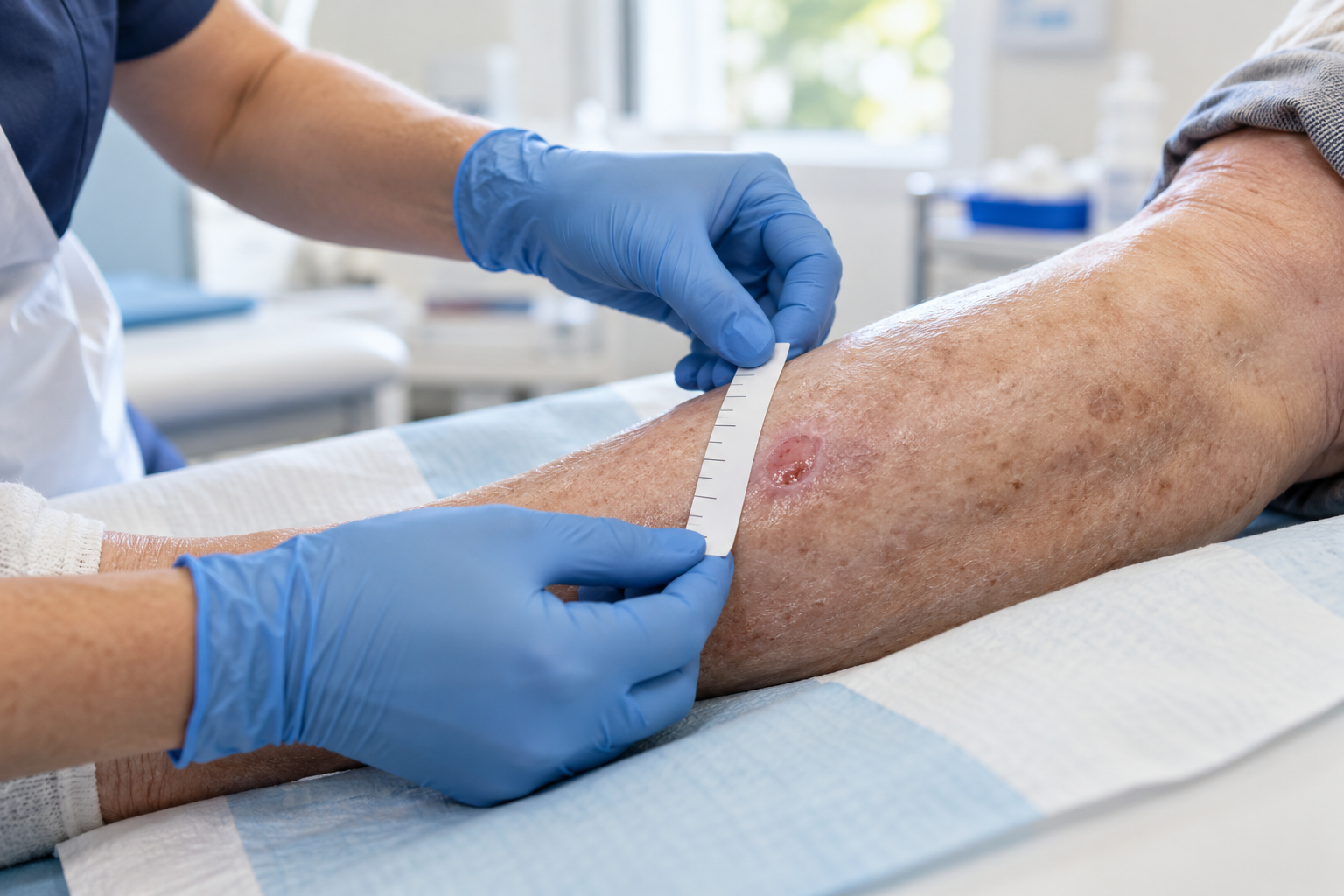
Once the history is discussed, the wound itself is examined. This usually includes looking at the wound bed, the edges, and the skin around it, since changes in the surrounding skin can say as much as the wound itself.
Measuring the wound is a standard part of this process. Length, width, and depth are typically recorded, along with notes about drainage, odor, and the tissue type present. This is not just paperwork. Measurements create a baseline that future visits are compared against, so progress, or lack of it, can be tracked clearly over time rather than guessed at.
Debridement, When It Applies
Some wounds benefit from debridement, which is the removal of tissue that is not contributing to healing. Not every wound needs this, and whether it applies depends entirely on what the wound looks like at that visit.
When debridement is part of the plan, it is done carefully and is typically far less uncomfortable than patients expect. The purpose is to give healthy tissue a better chance to do its job by clearing away what is standing in the way.
Choosing a Dressing That Fits the Wound
Dressing selection is not one-size-fits-all. The right choice depends on how much drainage is present, whether infection risk is a concern, the wound's location, and how the wound has been responding to treatment so far.
A dressing that worked well early in the healing process may not be the right choice later on. Part of an ongoing visit is reassessing whether the current approach still makes sense or whether something should change.
Planning the Next Step
Before the visit ends, the plan going forward is usually discussed. This can include:
How often follow-up visits should happen
What to watch for at home between visits
Whether any referrals or additional evaluations make sense
What kind of dressing changes may be needed at home
Follow-up is a meaningful part of wound care, not an afterthought. Wounds can change quickly, and a plan that made sense two weeks ago may need adjusting based on how healing is progressing.
Why Knowing This Ahead of Time Helps
Patients often walk into a first wound care visit expecting something dramatic or overwhelming. In reality, the visit is designed to be thorough, not intimidating. The goal is simply to understand what is happening with a wound in enough detail to build a plan that actually addresses what may be slowing healing, rather than just covering it.
You do not have to arrive with all the answers. Bringing whatever details you have, including photos of how the wound has changed, notes on drainage or pain, and a list of what has been tried, can help the visit be as useful as possible.
If you have a wound that has not been improving and you are unsure what a visit would involve, that uncertainty is a reasonable thing to ask about ahead of time.
Call Wound Care NC at 919-881-8295 to schedule an evaluation or ask questions before your appointment.
Educational content only. Not medical advice.