
Most surgical incisions heal without much drama. They close, the discomfort fades, and after a few weeks, the whole thing becomes a scar and a memory. But sometimes an incision does not follow that pattern, and that can be unsettling, especially when the original surgery already felt like the hard part.
If you have noticed something that does not seem right about a healing incision, it is worth understanding what to look for and why a second look may be a reasonable next step.

What Can Go Differently Than Expected
Incisions can run into trouble in a few different ways, and none of them mean the original surgery was done poorly. Healing depends on many factors beyond the surgery itself, including circulation, nutrition, infection risk, and how much pressure or movement the area experiences afterward.
Incision separation, sometimes called dehiscence, is when the edges of a healing incision start to pull apart instead of staying closed. This can happen gradually or more suddenly, and it is not something to just watch and hope improves on its own.
Drainage changes are another common sign. Some drainage is expected in the early days after surgery, but an increase in amount, a change in color, or the development of an odor can suggest the wound needs a closer look.
Delayed healing is exactly what it sounds like: an incision that is taking noticeably longer than expected to close, or one that seems to have stopped progressing altogether.
Redness, warmth, and swelling around the incision, beyond what is typical for the first several days, can also be worth having checked.
Why These Changes Deserve Attention
A dressing is only one part of caring for a healing incision. Understanding why an incision is behaving differently than expected requires looking at the bigger picture: circulation to the area, how much tension or movement the site is under, whether infection risk is present, and whether the surrounding tissue is healthy enough to support closure.
It is easy to assume that once surgery is finished, the hard part is over and the body will simply take care of the rest. Most of the time, that is exactly what happens. But when it does not, waiting and hoping is not the same as getting an actual answer about what is going on.
When Surgery Happened Somewhere Else
Some patients travel for surgery, whether that means going out of state for a specialist, choosing a particular surgical center, or having a procedure done somewhere far from home. That can make follow-up more complicated once the patient returns home and something about the incision does not look right.
Local wound care can fill that gap. You do not need to travel back to the original surgeon for every concern about how an incision is healing. A local evaluation can assess drainage, separation, infection risk, and overall healing progress, and can coordinate with the original surgical team when that makes sense.
This applies whether the surgery was cosmetic, reconstructive, orthopedic, or any other type of procedure. The distance between where surgery happened and where you live now should not be the reason a concerning incision goes unevaluated.
Signs Worth Getting Checked
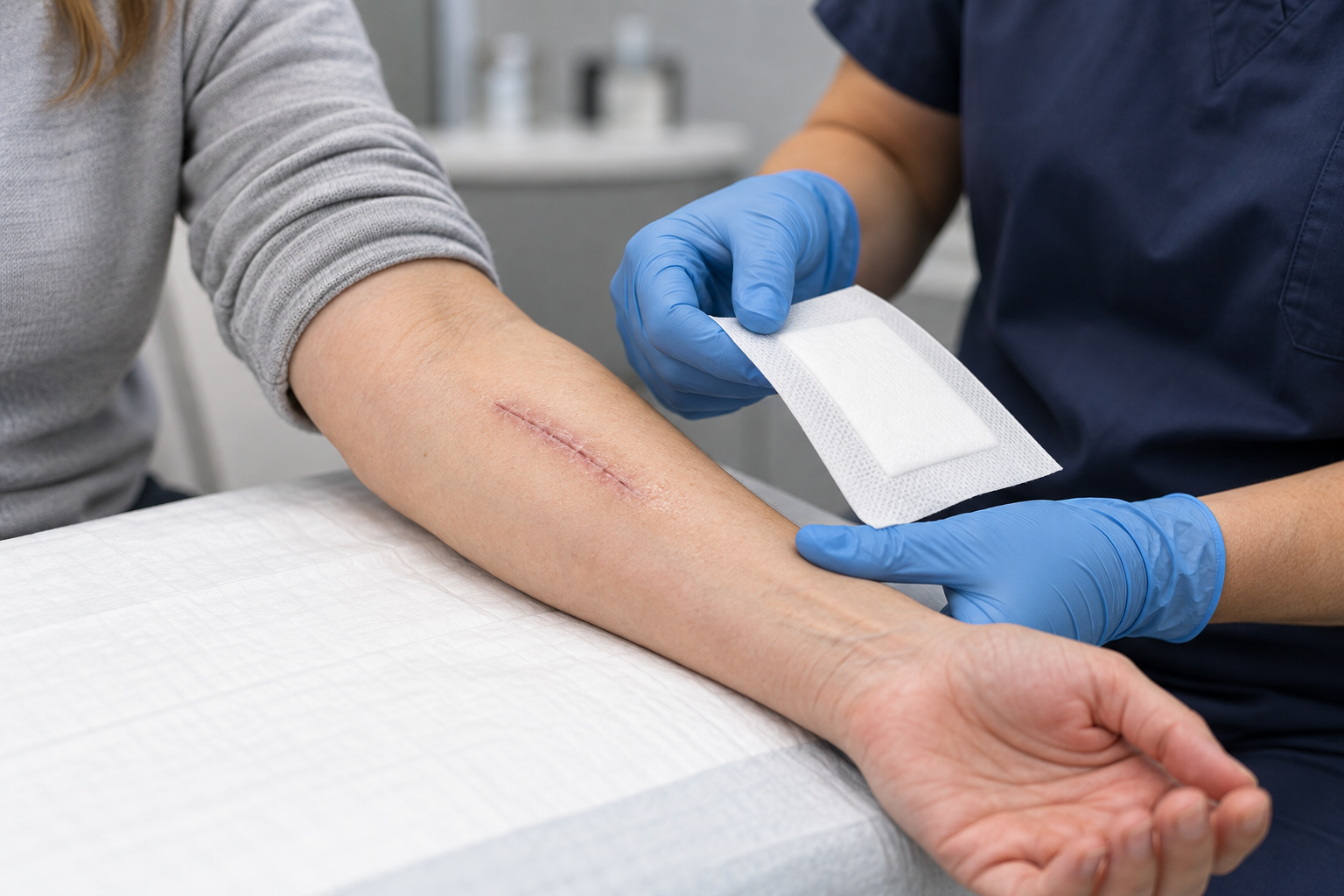
A few signs that a post-surgical wound may need evaluation:
The incision edges are separating or pulling apart
Drainage has increased, changed color, or developed an odor
The area is more red, warm, or swollen than the first several days after surgery
Pain is increasing rather than settling down
The incision has not visibly progressed in healing over one to two weeks
None of these signs mean something has gone seriously wrong. They do mean it is reasonable to have the area looked at rather than waiting to see if it resolves on its own.
A Second Look Is a Reasonable Step
If a healing incision is not behaving the way you expected, whether the surgery happened locally, out of state, or somewhere you traveled specifically for the procedure, it is reasonable to have it evaluated. You are not overreacting by asking questions, and getting a second look early does not mean something is definitely wrong. It means getting clarity instead of guessing.
Wound Care NC evaluates post-surgical wounds and helps patients understand what may be affecting healing, including incision separation, drainage changes, and delayed progress, regardless of where the original surgery took place.
If a surgical incision is opening, draining differently, or not healing the way you expected, call Wound Care NC at 919-881-8295.
Educational content only. Not medical advice.
